इसे खोलकर समझिए।
Atlas helps students understand their AP courses, and gives teachers something to teach with.
A textbook can only describe a moving thing with still words and still pictures. Most of what makes physics, calculus or chemistry hard is in the motion that gets left out: how a velocity turns as a ball climbs, how a slope shrinks as two points close in, how a molecule bends. In Atlas, every page has a figure you can turn, pause and take apart, and it moves the way the idea does.
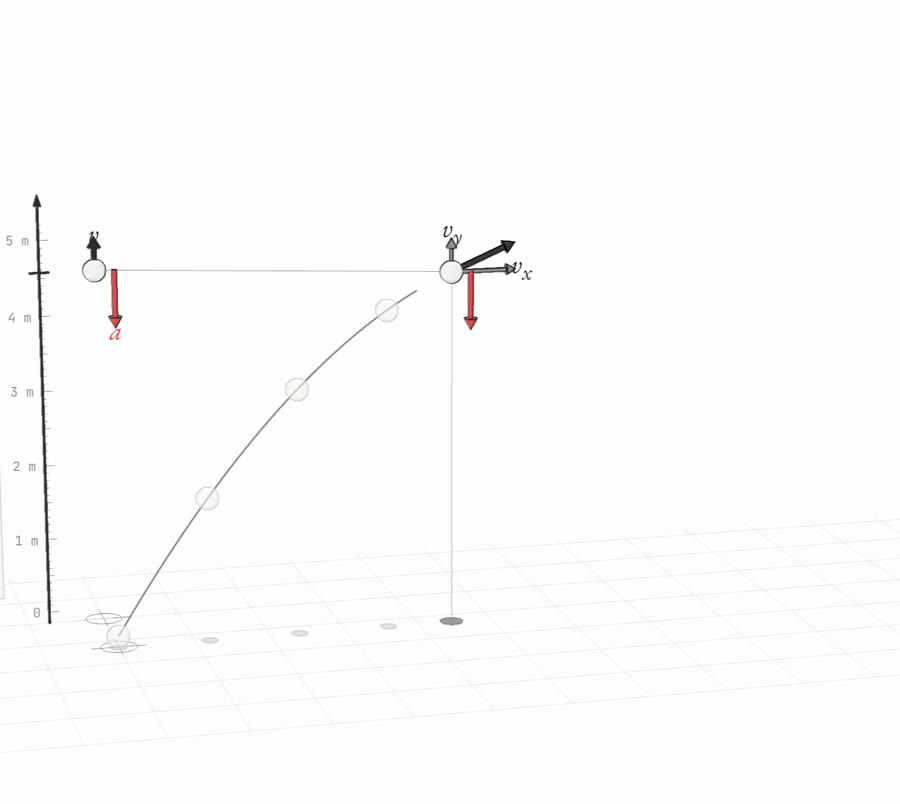
Seeing it is how many students get it
Plenty of students learn best by seeing. For them, an equation starts to mean something once they can watch it happen. Atlas is built around that. The practice is too: each question sets the figure to its own numbers, and when an answer is wrong, it is drawn on the figure so you can see where it went, before the working plays out one step at a time.
About Me
I'm Nathan Liow. I study computer science at UT Austin and work as a software engineer. I took a lot of AP classes, and I always understood things fastest when I could picture them. I built Atlas because it’s what I would have wanted when taking those classes.
- CS at UT Austin
- Software engineer
- 5 on 15 AP exams